


Deterministic Frequency Allocation System (DFAS)
AURA’s proprietary spectrum management system
Aviation relies on specific spectrum allocations for safe and efficient flight operations. These frequencies must not only be licensed but also fully dedicated to aviation. However, managing coverage and maintaining continuous communications links along flight routes are equally crucial. That’s where AURA’s DFAS steps in.
Coverage Assurance
DFAS ensures that coverage is allocated along entire flight routes, including identified contingencies. This is especially important for longer-range connections beyond visual line of sight between aircraft and ground stations.
User Experience
The DFAS system can be accessed via either API or AURA’s UI. Notably, it can also be utilized by commercial or government stakeholders to provision service in other aviation-licensed bands.
Safety & reliability
Deterministic communications service delivery is essential for safe, reliable unmanned flights. AURA’s DFAS ensures continuity, integrity, and end-to-end coverage. Regulators recognize this as a required feature for command-and-control (C2) networks.
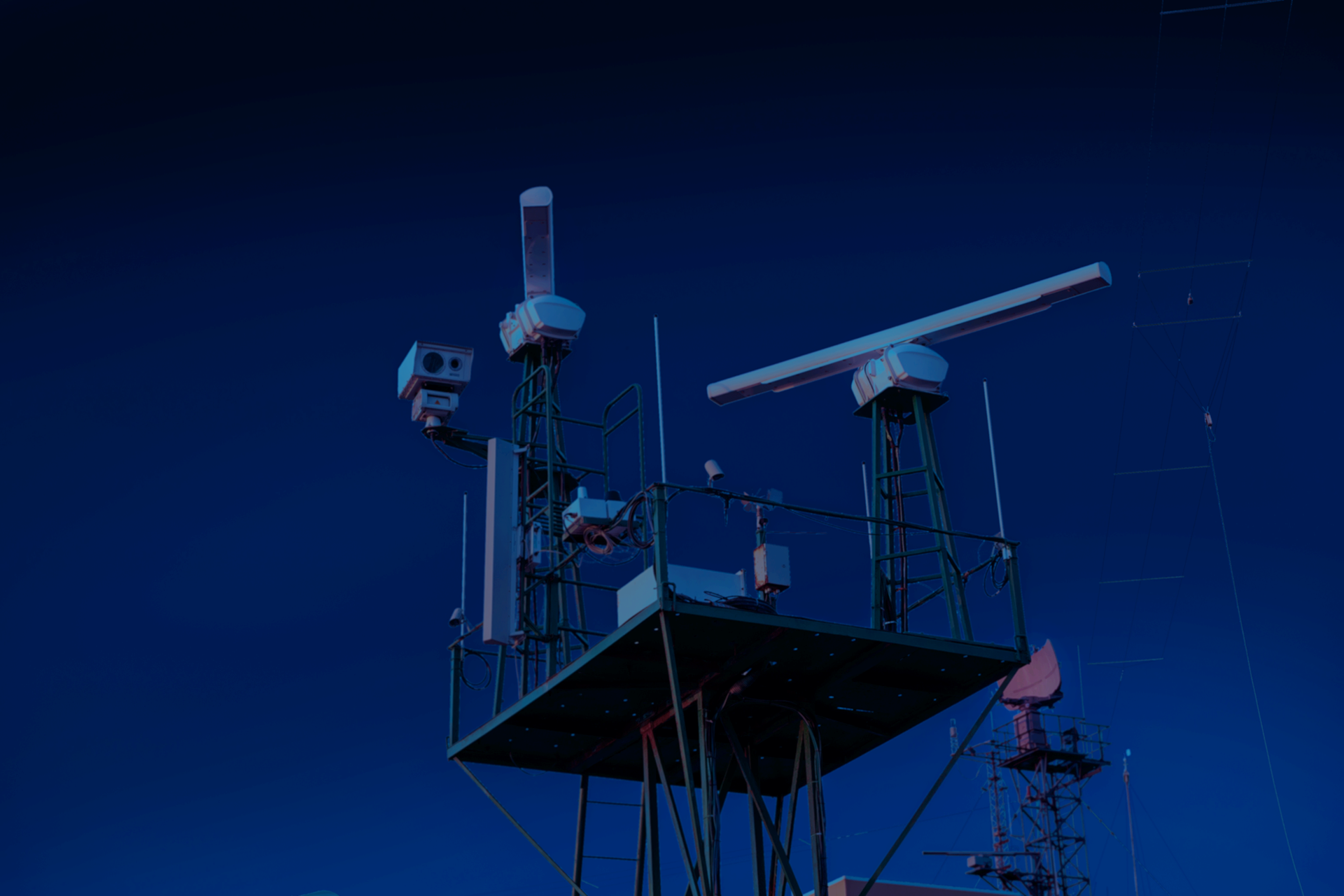
Radar Analysis & Design (RAD)
PREDICTING THE COVERAGE & PERFORMANCE OF ANY RADAR SYSTEM IN ANY REAL-WORLD ENVIRONMENT
AURA’s Radar Analysis and Design (RAD) technology provides highly configurable performance modeling and simulation, supported by sophisticated digital twin and sensor fusion capabilities.
Digital Twin Capability
Evaluate system responses against aircraft targets based on user-defined radar cross section (RCS), location, speed, altitude, bearing, and polarization parameters, as well as other critical design characteristics that impact performance.
Radar-Agnostic
Combine multiple modalities (e.g., monostatic, scanning, distributed) in a single laydown of high-resolution 2D & 3D coverage visualizations, displayed in seconds.
Cost Impact Predictions
Modeling of CAPEX and OPEX as part of a laydown to better inform site selection, system sizing, and cost planning prior to procurement.
Standards-Driven Models
Outputs include predicted performance parameters tied to DO-381A (e.g., horizontal/vertical position and velocity errors).